Four Kinds of Quiet: Reading a Room That Isn’t Laughing
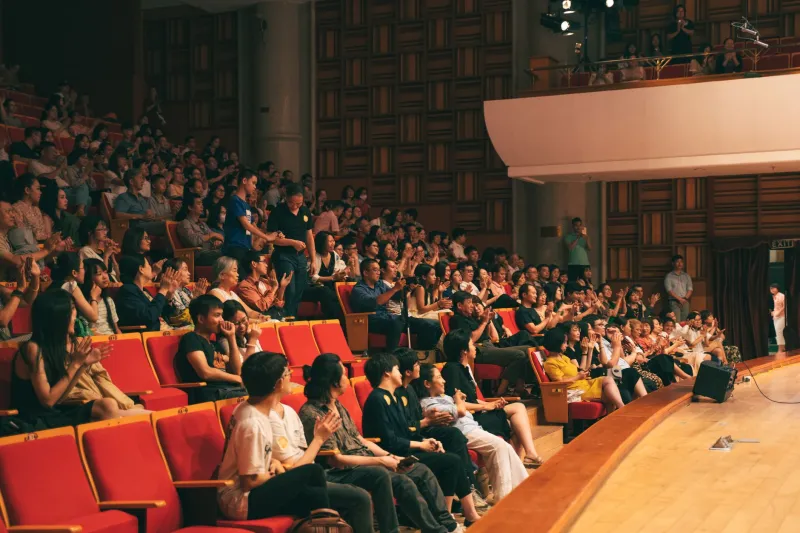
I once died on a Tuesday. Not literally. It was a scratch night above a pub in Leeds, the kind where the ceiling is low and the microphone smells faintly of someone else’s pint. I did a bit about regional train announcements. In the rehearsal room it had killed. In that room, it got nothing. Not a titter. Not a polite exhale. Just forty people looking at me like I’d read out a gas bill.
So I did what a lot of us do. I sped up. I added a tag that wasn’t rehearsed. I said something like ‘tough crowd’ and then hated myself for it. I got off, went to the bar, and a woman in a fleece said, ‘That train bit — my sister works for Northern. I was listening.’ She hadn’t been not laughing. She’d been somewhere else entirely.
That night cost me about three months of confidence and taught me the most useful thing I know about live performance: silence is not a verdict. It’s a genre. You have to work out which one you’re in.
Silence One: Concentration
This is the quiet of a room doing maths. People lean forward. Pens go down. Someone stops mid-sip. You can hear the building settle. It often happens when the material is dense, or moving, or simply new to them. The laugh hasn’t failed — it’s been postponed. Concentration silence usually breaks with a delayed reaction: a chuckle two lines later, a nod, a person turning to their mate at the interval to repeat the bit back.
The trap is mistaking it for a bad room and throwing in a cheap line to wake them up. You’re basically flicking a light on during a film’s quiet bit. Don’t.
Silence Two: Discomfort
This one has a texture. Bottoms shift. There’s a cough that isn’t a cough. Someone becomes very interested in the floor. You might get a laugh that starts and then stops, like a car failing to turn over. It’s the silence of a joke that’s landed wrong, or a subject that’s too close to the bone for that particular hall on that particular night.
The instinct is to double down, to explain the joke, or to do the ‘I know, I know’ face. Resist. Discomfort silence isn’t asking for a rescue. It’s asking for a lane change. Move on, keep your pace, and don’t make the audience responsible for your recovery. They’ll forgive a wrong turn. They won’t forgive being made to manage your feelings about it.
Silence Three: Dead Air
This is the technical one. A missed cue. A mic that pops. A prop that isn’t where it should be. The audience isn’t judging you — they’re waiting for the show to start again. Dead air has a slightly bored, watch-checking quality. It’s not about the writing. It’s about the gap.
The fix is mechanical: find the next thing, say it clearly, and let the room re-enter. Don’t fill dead air with apology. Apology makes it longer.
Silence Four: Attention
This is the rare one, and the one I’ve stopped chasing. It’s deeper than concentration. The room has stopped performing its own reactions. No rustling, no nudging, no laughing at the laugh. Just a collective lean. You can feel it in your chest before you can name it. It usually arrives late in a show, once the audience has decided to trust you.
Attention silence is not a problem to solve. It’s the thing you’re trying to build. If you panic and add a joke to break it, you’re essentially apologising for being interesting.
The Panic Edit
For years my default was to panic-edit live. A quiet room meant a faster delivery, an extra aside, a bit of crowd work. Sometimes that works. Mostly it’s like turning up the radio when the signal’s bad. You don’t get more clarity. You get more noise.
The better move is to change nothing for ten seconds. Breathe. Let the line land or not land. Then continue as written. If the silence was concentration, you’ve kept the shape of the piece. If it was discomfort, you’ve avoided making it worse. If it was dead air, you’ve stopped digging.
Reading the Room Without Panicking
You can’t see much from a stage with the lights up, but you can hear plenty. Listen for coughs — a cluster usually means discomfort, a single one means nothing. Listen for the interval chatter: if people are quoting your lines back to each other, the silence was working. If they’re talking about the parking, it wasn’t.
I also ask a trusted person to sit in the cheap seats and text me one word at the interval: ‘listening’, ‘squirming’, ‘asleep’, ‘fine’. It’s not scientific. It’s better than my own adrenaline.
A Checklist for Real, Unpredictable Rooms
- Wait ten seconds before deciding a silence is bad.
- Check the shoulders and feet, not just the faces. Leaning in is good. Shuffling is information.
- Don’t add a line that wasn’t rehearsed just to fill a gap.
- If you’re unsure, keep the script. Consistency reads as confidence.
- Use the interval. Ask one person. Not for a review — for a temperature.
- Never say ‘tough crowd’. It makes the room do your job.
- Remember that a room can be with you and still be quiet. Especially in November, in a parish hall, with the heating ticking.
The Leeds night wasn’t a failure. It was a lesson in listening to the right signal. The train bit still works, by the way. I did it last month in a village hall near Retford. Got a proper laugh. Then a long, concentrated hush for the ending. I didn’t fill it. I just let it sit there, and the room sat with me.
That’s the job, really. Not to be funny every second. To know what the quiet is for.