The Spare Key: Notes on Learning a Part You Might Never Play
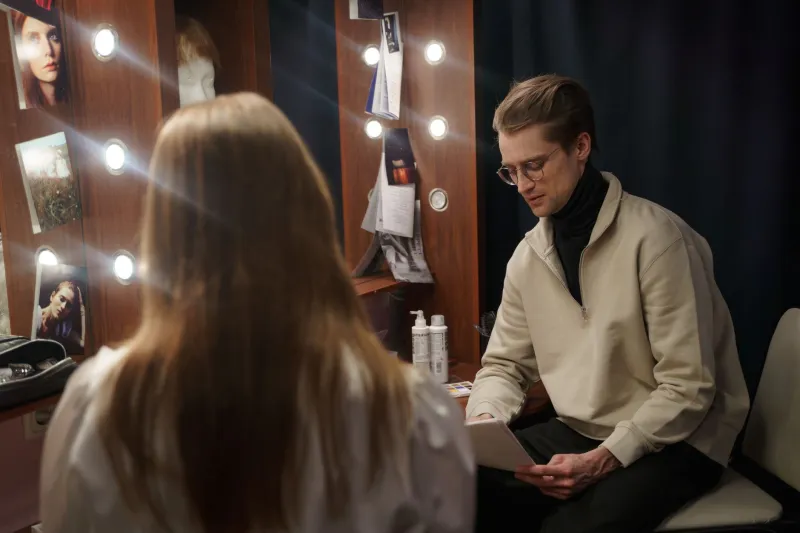
The first cover rehearsal I ever did had an audience of two: me and the deputy stage manager, who was eating a flapjack with the quiet concentration of someone defusing something. The rest of the company had gone to the pub. Fair enough — they’d been in tech since ten.
This was a small touring show, the kind that fits in a van and plays venues with a kettle in the green room and a laminated poster from a previous season still Blu-Tacked to the noticeboard. I was covering one of the parts. Not the lead, not the comic relief, just a role that needed a body in the room in case a body was required. I had a script, a pencil, a pair of shoes that roughly matched, and a growing suspicion that I might be learning lines for nobody.
That suspicion turned out to be mostly correct. I never went on. But the months I spent as the spare key taught me more about preparation, patience and the strange dignity of invisible work than any job where I actually got to say the words out loud.
The bit nobody puts on the poster
There’s a particular kind of loneliness to being the cover. You’re in the room, but you’re not in the picture. At the read-through you sit slightly outside the circle. At notes sessions you write down other people’s adjustments. When the company does a photo call, you hold the coats.
I once spent a whole afternoon learning a six-minute blocking sequence for a scene that got cut before opening. Six minutes of crossed legs, a teacup, two significant looks and a door slam. I could still do it now, probably. Nobody ever asked. That’s the job: you build a whole interior life for a character whose main purpose is to be someone else’s safety net.
And yet. There is something oddly pure about learning a part you’ll never perform. No opening-night nerves, no reviews, no pressure to be charming in the bar afterwards. You get the bones of the thing without the noise. You learn the shape of a person — their pauses, their bad habits, the way they hold a mug when they’re lying — and then you file it away. It’s like memorising a poem in a language you only half-speak.
Learning lines in the gaps
Cover work happens in the cracks of the day. On the bus. In the bath. Walking to the shop for milk and coming back with a pint of it and a perfect grasp of act two, scene four. I learned most of my part while waiting for a kettle to boil, mouthing the lines at the kitchen window like a man having a very low-stakes argument with a pigeon.
The odd thing is that you end up knowing the character’s silences before the actor playing them does. You know where they breathe. You know which line is really a question. You become a sort of understudy to their subconscious. And then you watch them do it on stage, night after night, and you think: yes, that’s the pause I found in the shower. That’s the look I practised on the 18:42 to Leeds.
It would be easy to be bitter about that. I was, occasionally. But mostly it felt like a private education. I learned how another actor solves a problem. I learned how a director changes their mind. I learned that a script is not a fixed object but a series of arguments that eventually settle down.
The bag by the door
Every cover develops rituals. Mine was the bag.
A canvas tote, always packed, always by the door. In it: the script, a pencil, a notebook, a phone charger, a pair of black socks, a snack that didn’t crumble, and a small bottle of water that I replaced more often than strictly necessary. It was a ‘what if’ bag. What if the phone rings at 4pm? What if the train is delayed? What if the actor’s knee goes and I have to be at the theatre in ninety minutes with a working knowledge of someone else’s life?
The bag made me feel ready. It also made me feel slightly ridiculous, like a man who carries an umbrella in July. But readiness is a muscle, and the bag was the gym. The ritual mattered more than the contents. Checking the socks was a way of telling myself: you are still in this. You are still paying attention.
The other ritual was the walk-through. Once a week, before the half, I’d stand in the wings and run the first five minutes in my head. Not the lines — the geography. The chair here, the door there, the bit where you have to dodge the flying coat. It kept the map fresh. It also kept me out of the green room, where the conversation usually turned to who was going to be in the panto and whether the tour van had a working heater.
Green-room maths
Here’s the uncomfortable bit. Covering a role means doing a strange sum in your head. If they go down, you’re on. If they don’t, you’re not. You don’t want anything bad to happen. But you do want the moment. And that contradiction can eat you if you let it.
I developed a rule: never hope for the phone call. Hope for the work. The phone call is someone else’s bad luck. The work is yours. So I stopped checking my phone in the afternoon, and started treating the preparation as the gig. The gig was the rehearsal room with the flapjack-eating DSM. The gig was learning the blocking. The gig was being the person who could step in if the worst happened and the show had to go on.
That shift did something useful. It separated ambition from readiness. Ambition is fine. Readiness is better. Ambition says ‘I want this’. Readiness says ‘I can do this, whether or not I want it today’. One is a mood. The other is a practice.
What it actually teaches you
We talk a lot in the arts about visible work — the performance, the poster, the review. But most of the work is invisible. The person who checks the fire exit. The one who prints the programmes. The cover who knows the lines in case the sky falls in. None of it gets a curtain call. All of it holds the thing together.
I’ve carried that into other rooms since. The pitch that didn’t land. The drawing that stayed in the drawer. The song nobody heard. It’s easy to measure those things by whether they got used. But the spare key isn’t wasted because it stayed in the lock. The practice of being ready is its own small craft. It keeps you in the building.
On press night, I stood in the wings and watched the actor do the part I knew better than my own address. They were good. Really good. I clapped until my palms stung, then I went home and had beans on toast. The bag stayed by the door. The phone didn’t ring.
And that was the job, done properly. Not cashed in. Just ready.