Bric-a-Brac With a Backstory: Staging Two Acts on a Thirty-Pound Props Budget
Last February I stood in a hospice charity shop in a market town, holding a wicker basket and doing sums on the back of a receipt. The basket was £3. The show was a two-act play with six characters, three locations and a props list that had already started to look like a joke. I had set myself a challenge: every visible prop had to come from a UK charity shop, and the whole lot had to cost £30 or less.
The rules I set myself
- Every visible prop must be bought from a charity shop. No online orders, no props catalogue, no borrowing from the venue's store cupboard.
- Total spend: £30. Receipts go in an envelope. When the envelope is full, the buying stops.
- No item joins the company unless it can do at least two jobs or earn a laugh in one.
- Cash only. It keeps the budget honest and the till volunteers happy.
- If it doesn't survive a dress rehearsal, it goes back to the donations pile.
I broke rule five once. More on that later.
What the shops gave us
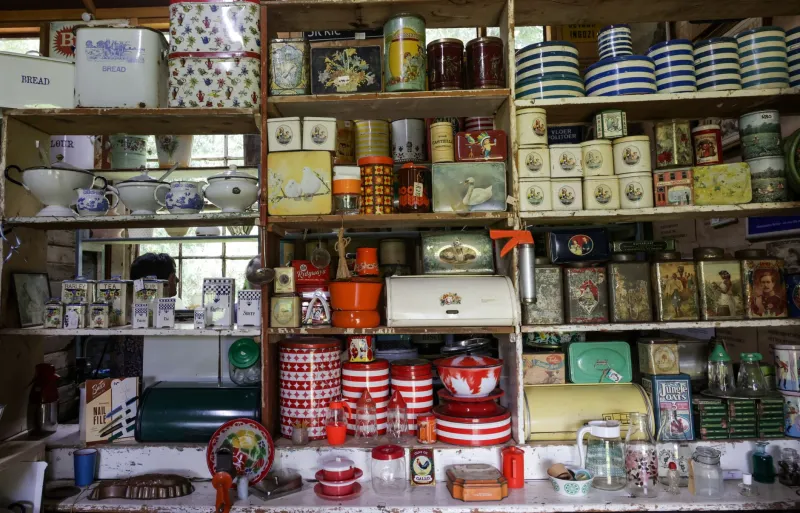
The wicker basket became a picnic hamper, a baby carrier and, in act two, a makeshift suitcase. It cost £3 and had a broken handle that we taped with gaffer. That break was useful: the character carrying it looked like someone who had packed in a hurry. A props catalogue would have sent me a pristine basket with a price tag and no history. The charity shop sent me a basket with a story already attached.
Other finds: a tea tin for £1.50, a chipped enamel jug for £2, a small transistor radio for £6 that didn't work but looked right, and four mismatched teacups for £2. The radio was the biggest single spend. It sat on a sideboard and did nothing except look like it belonged to a man who listens to the shipping forecast. That was enough.
The best find was a folded deckchair for £4. It was faded, slightly rusty and absolutely perfect for a garden scene. On stage, under warm light, it read as a whole summer. We didn't need a painted backdrop. We needed one object that had already spent twenty summers outside.
Where it went wrong
The fake fern. Four pounds. It shed plastic leaves like a cat in July. By the second preview there was more fern on the floor than in the pot. We swept it up, put it in a bin bag and wrote the character a line about never being able to keep plants alive. The fern became a joke, then a plot point. That is not what I planned, but it is exactly what I mean about second-hand props: they push back, and the pushback is often better than the plan.
The other failure was a beautiful evening bag. £5. It was tiny, beaded and completely useless because the actor needed to pull a letter out of it in the middle of a scene. I bought it because it looked right on the shelf. It did not look right in a hand. It went back to the donations pile, and I learned to carry a folded A4 letter in my pocket when I went shopping.
The broken rule was a clock. I spent £7 on a mantel clock that ticked so loudly the front row could hear it over the dialogue. I told myself it was atmospheric. It was not. It was a metronome with a grudge. We took the battery out and used it as a silent prop. The clock stayed, but the budget had to absorb the mistake.
Why cheap objects make better choices
A props catalogue gives you options. Too many options. You start choosing the version of a character you already have in your head. A charity shop gives you constraints: the shelf is what it is, the budget is what it is, and the object has already lived a life. That forces you to ask better questions. Who owned this? Why is it chipped? What would this character never throw away?
The wicker basket made our lead look practical and slightly chaotic. The tea tin made her mother look like someone who saves things. The radio made the neighbour look like a man with a routine. None of that was in the script. All of it came from objects that cost less than a sandwich.
There is also a practical honesty to second-hand props. They are usually lighter, cheaper to replace if they get damaged, and less precious. Actors relax around them. A £200 replica antique makes everyone nervous. A £3 basket from the hospice shop makes everyone experiment.
A small-company checklist
If you fancy trying this on your next show, here is what I would do differently:
- Write your props list in three columns: essential, characterful, and nice-to-have. Only the first two get budget.
- Set a hard total and carry cash. Card taps make £30 feel theoretical.
- Take a tape measure and a folded A4 letter. Check the bag, the pocket, the sightline.
- Photograph receipts as you go. The envelope always goes missing.
- Build a 'maybes' pile in the rehearsal room. If an object survives two weeks of blocking, buy it.
- Test anything that makes noise. Clocks, jewellery, stiff coats, squeaky baskets.
- Check the venue's lighting. Some charity-shop fabrics go transparent under fresnels.
- Keep one pound coin back for the meter, the bus, or the inevitable emergency tea.
We finished the run with £29.50 spent and a props table that looked like a jumble sale with a lighting plan. It was the most coherent design I have done. Not because it was cheap, but because every object had to earn its place. The wicker basket is still in my studio. The fern is not. Some lessons cost £4. Some cost £30. This one cost both, and I would do it again.