Loose Change, Lint and a Lonely Mint: What Costumes Carry After the Curtain
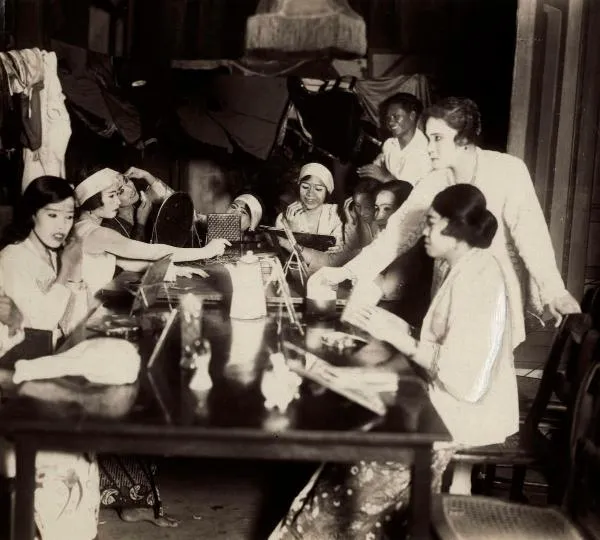
Photo: Unknown authorUnknown author, Public domain, via Wikimedia Commons
On the last night of a run, before the get-out, there is a quiet ritual that never makes the programme. The wardrobe supervisor hands you a bin bag. You turn out the pockets. What comes out is not costume. It is life.
I have helped empty enough costumes to know that the pocket is the least fictional part of any show. A character may have a carefully written backstory, a dialect coach and a motive. But the pocket tells the truth: a bus ticket, a Co-op receipt, a hair grip, a 2p coin, half a mint imperial in its little foil jacket. The character would never carry a receipt for milk and bin bags. The actor would. And the actor was there, sweating under the lights, needing milk.
The Tupperware of Truth
After a recent run finished, I started keeping the small finds in a plastic tub. Not because I am precious about rubbish, but because laying them out on the dressing-room table felt like an exhibition. We labelled it 'Small Finds, Autumn Run'. It was not glamorous. It was a tub. But it became the most honest object in the building.
There was a Stagecoach ticket dated a Tuesday, corners softened by a wash cycle that should never have happened. There was a shopping list in biro: cat food, birthday card for Nan, Sellotape. There was a train ticket stub from a journey that had clearly been stressful, because someone had drawn a small angry face on the back. There was a button. There was a plaster. There was a scratch card, unscratched, which felt either hopeful or deeply pessimistic depending on your mood.
And then there was the mint imperial. Half-eaten. Fossilised. Stuck to the lining like a tiny, minty barnacle.
Bus Tickets and Other Small Confessions
Actors are always being told to 'live in the character'. But the pocket is where the character and the person fail to separate. You put on a coat that has been worn by someone else in a different play, in a different town, and you inherit their lint. You inherit the shape of their shoulders. You inherit the faint smell of someone else's washing powder. And, if you are lucky, you inherit a receipt for a pint and a packet of crisps.
I like to think of these objects as accidental autobiography. A shopping list is a diary entry with no adjectives. A bus ticket is a map of a small, ordinary journey. A lucky coin is a superstition you can hold. The actor who wore the costume before you was not trying to leave a message. They were just getting through the day. But the message is there anyway: I was here. I was tired. I needed Sellotape.
Audiences leave things behind too, of course — a scarf on a seat, a programme folded into a fan, a wine gum stuck to the floor. But the pockets are different. They are the backstage equivalent of a time capsule, except nobody agreed on what to put in it and nobody remembered to seal it.
The Mint Imperial Problem
The mint imperial raises questions. Do you throw it away? It is, technically, food waste. But it is also evidence. It says someone stood in the wings, nervous, and reached for a small sugary comfort. It says the costume had a life before the curtain went up. It says we are all just people in borrowed clothes, trying to remember our lines.
We did not throw it away immediately. We put it on the table with the other finds. Someone took a photo. Someone said, 'That's the most actor thing I've ever seen.' Then we threw it away, because it was a half-eaten sweet and we are not animals.
What the Wardrobe Knows
Costumes are shared, hired, borrowed and altered. A jacket may have been a banker in one play, a soldier in another, a dad at a wedding in a third. The pocket is the only place where all those people meet. It is a small, uncurated archive of the people who wore the clothes before us. We do not clean it out because cleaning feels like erasing. We also do not clean it out because the dresser has fourteen other things to do and the get-out starts in twenty minutes.
But there is something else. The pocket is the last part of a performance that is not designed. The set is designed. The lights are designed. The blocking is designed. The pocket just happens. It collects whatever the day threw at the person inside the costume. That is why it feels so revealing. It is the only part of the show that was not rehearsed.
A Note on Not Cleaning Up
I am not suggesting we leave actual rubbish in costumes as a tribute to the craft. Please do not leave a half-eaten mint imperial for the next person. That is not method acting; that is a health hazard.
But I am suggesting we pay attention to the small finds. At the end of a run, lay them out. Laugh at the shopping list. Recognise the tired Tuesday bus ticket. Put the lucky coin back in the tin. The line between actor and everyday life is not blurred. It is just a pocket. And the pocket is always full of something.
On the last night, before the bin bag, I sometimes leave a note. Nothing dramatic. Just: 'Good luck. Mind the third step.' The next person will find it in a jacket that smells faintly of someone else's washing powder. They will smile, or they will ignore it, or they will think it is a shopping list. Either way, the costume has carried something forward. That feels like the right kind of residue.