Your Name Is the Shop Sign: The Hidden Bill for Building a Portfolio Under Your Own Name
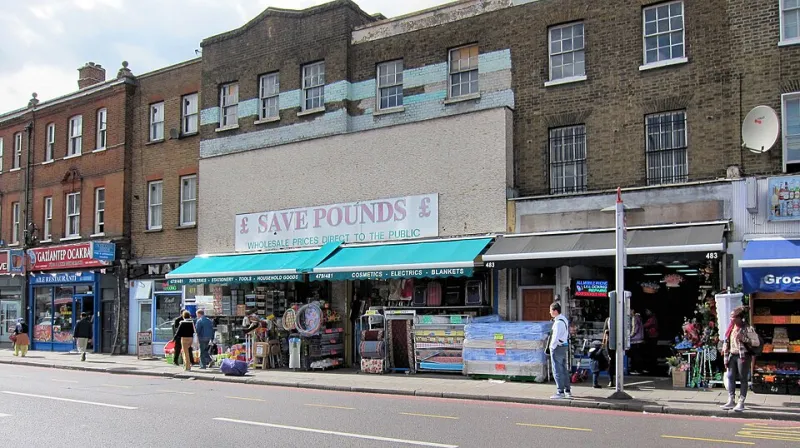
Photo: Alan Stanton, CC BY-SA 2.0, via Wikimedia Commons
There's a particular kind of email that lands in my inbox about once a fortnight. It opens with "Hi Owen" and ends, four paragraphs later, with a request that is either completely reasonable or quietly enormous. Both arrive in the same friendly tone. Both are addressed to a person rather than a company.
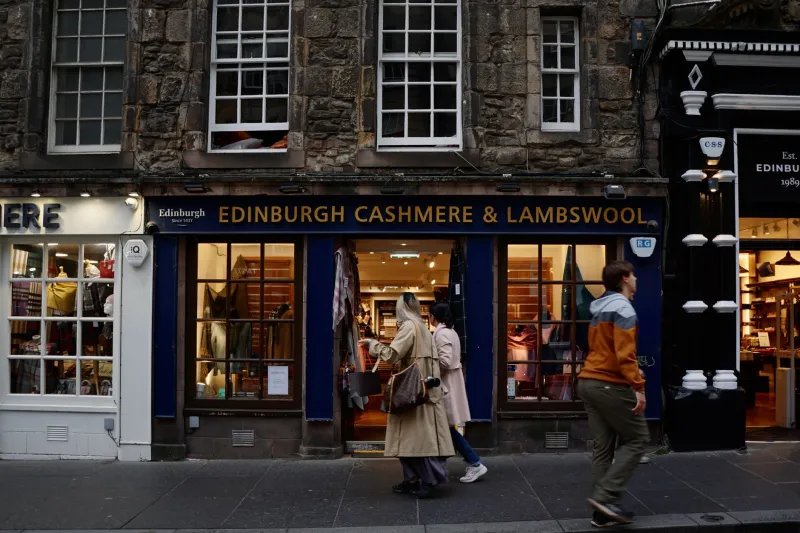
That's the deal you make when the website is your name. Not a studio name, not a clever collective noun, just the two words your parents chose in 1993. I've been running owenshipp.co.uk for a while now, and I've started to think of it less as a portfolio and more as a shopfront where the sign above the door is also my face.
The invoice problem nobody warns you about
Here's a small, unglamorous example. When a venue books a company, the invoice says something like "Harbourlight Theatre Co. — £1,400." When a venue books me, the invoice says my name, next to a number, next to my sort code. There is no layer of abstraction. If the payment is late, it isn't the company chasing it — it's me, on a Tuesday, drafting a polite nudge and deleting the word "just" three times because I've read that it undermines confidence.
Pricing under your own name is harder for the same reason. A company can shrug and say "that's our rate." I have to say "that's my rate," which sounds, to my own ear at least, like a claim about my worth as a human being. It took me an embarrassing length of time to separate those two things. The work has a value. The person answering the emails does not have to apologise for it.
My rule now: quotes go out from the site address, in a document, on a Thursday. Never in a live reply, never at 9pm, never with a discount offered in the second sentence because I panicked at the silence.
What stays off the homepage
The stranger question is what to publish. Early on I put everything up: the workshops, the half-finished sketches, the fringe show that got two reviews, the loss of a family member that quietly flattened six months of making. That last one never went live, but I wrote it twice, which tells you something about how blurred the line gets.
What I've landed on is a fairly blunt filter, and I offer it in case it's useful:
Does it help someone decide whether to work with me, book me or read me? If yes, it goes up. If it's just true, it stays in the notebook.
That filter keeps the homepage honest without turning it into a diary. The grief, the money worries, the day job that pays for the gaffer tape — those are real and they shape the work, but they aren't the shop window. There's a difference between being a human on the internet and being a person who has been optimised for search.
The bits I got wrong
I once replied to a fairly aggressive email at 11.40pm with a paragraph I'm still slightly ashamed of. Nothing libellous, just spikier than I'd like to be remembered for. The lesson wasn't "be nicer" — it was that a personal-name site has no buffer. When you're the brand, a bad hour looks like a bad character.
So the second rule: nothing goes out after 8pm that I wouldn't be happy to read aloud in a parish hall the next morning. It's a low bar. I still clear it maybe seven times out of ten.
Being findable is easy. Being findable without flinching at your own archive is the actual work.
Keeping the work visible while staying a person
A few things that have genuinely helped, in no particular order. I keep a separate email for the site so that the inbox has edges. I write project pages in third person and reply to emails in first, which sounds like a fussy distinction and yet does something useful to my head. I say no with a reason rather than a paragraph of apology. I update the site on a fixed day each month so it doesn't bleed into every evening.
And I've stopped pretending the site is a finished thing. It's a stall. Some weeks the stall is well-stocked; some weeks it's a folding table with two sketchbooks on it. That's allowed. The name above the door doesn't have to mean the shop never closes for lunch.
If you're building something under your own name — a portfolio, a shop, a small theatre outfit with your surname on the paperwork — the practical advice is dull and it works: set hours, real prices, a filter for what goes public, and a buffer between the person and the post. The intimacy is the whole point. It just needs a door on it.