Leaves in the Green Room: A Care Manual for the Work You Keep Putting Down
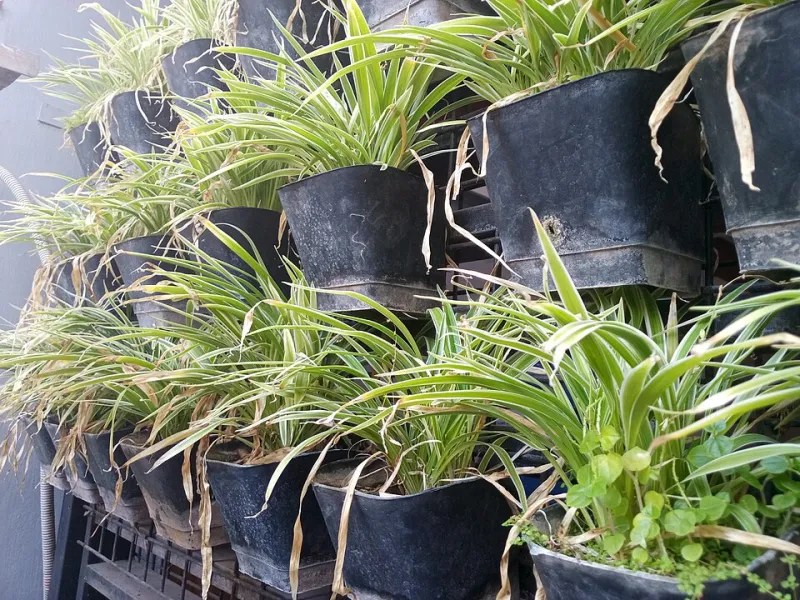
Photo: S.samsamyang, CC BY 4.0, via Wikimedia Commons
The spider plant in the green room had been there longer than most of the staff. It sat on a windowsill behind a stack of old programmes, leaves dusty, pot chipped, one stem drooping towards the radiator like it had given up on the conversation. Nobody knew who owned it. Nobody remembered watering it. And yet, somehow, it was still going.
I noticed it properly during a get-out at a small venue off the high street. We were shifting chairs, coiling cables, eating the last of the biscuits. Someone said, “Is that plant ours?” Nobody answered. That felt familiar. A lot of creative practice is like that: nobody quite knows who is looking after it, but it keeps producing leaves anyway.
I am not going to pretend a houseplant is a life coach. But over the next few weeks, I kept thinking about that scruffy thing in the corner. Here is what it seems to know about keeping the work going between projects, in the gaps, in the odd Tuesday afternoons when nobody is asking for anything.
Light: put the work where the day actually falls
The green room plant was not in a grand conservatory. It was in a room with a kettle, a noticeboard and a window that caught about forty minutes of decent light. That was enough.
Creative practice often fails because we put it in a cupboard. The notebook goes in a drawer. The script lives in a folder called “Ideas 2026”. The sketchbook is saved for a mythical clear weekend. Then we wonder why nothing grows.
Put the work where the light falls. For me, that means a sketchbook by the kettle, a script on the sofa arm, a notebook in the bag I actually carry. Not a shrine. Not a system. Just somewhere within reach when the day briefly opens up.
Water: little and often beats the dramatic soak
People overwater plants. They also overwater creative projects. A six-hour Sunday session after three months of nothing is not care; it is a flood. The roots do not thank you.
A small, boring appointment with yourself is better. Twenty minutes before the kettle boils. One page after dinner. A quick voice note on the walk to the bus stop. The plant does not need a ceremonial watering can; it needs not to be forgotten for a month.
The same goes for the work. A little attention, repeated, keeps things alive far better than a grand gesture you cannot sustain.
Pruning: cut the dead bits, not the whole plant
There were brown tips on that spider plant. There usually are. You snip them off and carry on. You do not throw the plant in the bin because one leaf looks tired.
I am bad at this with scripts and sketches. One flat scene and I want to declare the whole project dead. One bad drawing and the sketchbook becomes evidence against me. But pruning is not punishment. It is maintenance. Cut the scene that is not doing anything. Bin the paragraph you were only keeping because it took ages. Move the failed drawing to the back page and start again.
Keep the roots. Cut the dead bits. There is a difference.
Neglect: some weeks, survival is the whole achievement
Spider plants are famously hard to kill. This is not a licence to ignore them forever, but it is a useful reminder that a bit of neglect is not always fatal.
Creative practice goes through fallow periods. You get ill. You get busy. You get a job that eats your evenings. You have a month where the only creative act is choosing a different route to the shops. That does not mean the practice is over. It means it is winter.
The trick is to check in occasionally. Is the soil bone dry? Give it a splash. Is the notebook still there? Open it for two minutes. Do not confuse neglect with abandonment. One is a season. The other is leaving the pot in a skip.
Company: the right neighbours help
That plant sat near a kettle, a radio and a rotating cast of people complaining about the heating. It was not alone. I think that mattered.
Creative work can be solitary, but it does not have to be lonely. You need the person who asks how it is going without making it a whole thing. The writing group that meets in the back room of a pub. The friend who reads the draft and tells you the truth. The other maker who says, “Mine is also going badly, pass the biscuits.”
You do not need a network. You need a windowsill with decent company.
Repotting: when the roots start showing
Eventually, a plant gets cramped. Roots push through the drainage holes. Water runs straight out. It is not dying, but it is asking for more room.
Creative practice does the same. You get bored of the same format. The sketchbook feels too small. The script wants a bigger cast. The project that fitted on the kitchen table now needs a room with a door. Repotting is messy. The roots are exposed for a bit. The plant sulks. But staying in the same pot forever is not loyalty; it is just cramp.
You can repot in small ways: a new notebook size, a different open mic, a collaboration with someone who works in a way you do not understand yet. Give the roots somewhere to go.
Patience: it will not flower on your schedule
Spider plants produce little babies when they are ready. Not when you want them to. Not when the algorithm suggests it. Not when you have cleared your calendar and lit a candle.
Creative work is like that. Some projects take years to look like anything. Some never do. The point is not to stand over the pot shouting, “Grow!” The point is to keep the conditions roughly right and then get on with your life.
I have a note above my desk that says: “The plant does not care about your content calendar.” It is not profound, but it stops me from mistaking panic for productivity.
The pot by the radiator
The spider plant is still in that green room, as far as I know. Still dusty. Still chipped. Still not asking for a brand strategy. It has outlasted several productions and at least one set of curtains.
I did not take a cutting. I thought about it, but it felt like stealing from a colleague. Instead, I wrote this down. Seven small rules, borrowed from a plant that nobody watered.
Keep the work where the light falls. Water it a little. Cut the dead bits. Allow for winter. Find decent company. Repot when the roots show. And do not expect flowers on a schedule. That is not a productivity system. It is just a way of keeping something alive.