The Table Keeps Talking: Notes From a Zine Exchange in a Library Back Room

Photo: handmade zines on a library table, via monsterzone.org
There is a particular sound a stack of zines makes when you set it down on a folding table: a soft, papery thump, followed by the silence of everyone deciding whether to look. I heard it on a Saturday morning in the community room of my local library, somewhere between the reference shelves and a laminated notice about renewals. I had brought twenty copies of a small, imperfect thing I’d made. I came home with eleven.
The stack I nearly didn’t bring
The zines were A6, folded from A4, stapled by hand. Some staples sat slightly off-centre. The covers were printed on the library photocopier after I’d asked very nicely, and the ink had a habit of smudging if you held them too long. In other words, they were exactly the sort of object I would have apologised for at a market stall. At a swap table, nobody asked me to apologise.
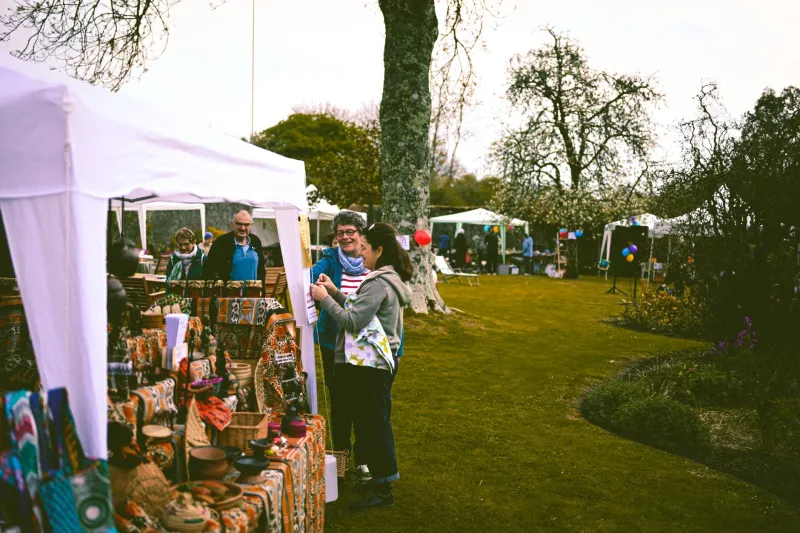
The setup was simple: a trestle table, a hand-written sign, a few plastic tubs of other people’s pamphlets, comics, photocopied poems and one very serious-looking guide to moss. The rule was written in marker: take one, leave one. No prices. No card reader. No QR code taped to the corner. Just a small, non-commercial exchange in a room that smelled faintly of radiator dust and floor polish.
A table with no prices on it
I had expected to hover. I am good at hovering. At fairs I stand near my work with the fixed smile of someone pretending not to watch people decide whether I am worth £4. Here, there was nothing to defend. The zines were not stock. They were stuff. If someone took one, they weren’t taking money out of my pocket; they were taking a copy off a table and putting something else in its place.
That changes the conversation. A woman in a green coat picked up my zine, turned it over, and asked who had made the cover. Not “how much?” Not “what’s it about?” Just: who made it? I said I did. She said it looked like a bus ticket, which I took as a compliment, and then she swapped it for a tiny folded comic about a cat who works in a call centre. That comic is now on my kitchen noticeboard, next to a dental appointment card and a photo of a dog I do not own.
What people ask when they aren’t buying
The questions were better because they weren’t transactional. People asked how long it took, whether I’d used a photocopier or a printer, why I’d chosen that paper, and whether the story was true. One retired librarian asked about the staples. Not in a judgmental way — she wanted to know if I’d tried a long-arm stapler. I had not. I wrote it down.
Another person asked if they could take two copies: one for them, one for a friend who couldn’t come out. Strictly speaking, the sign said take one. But the table was not a shop, and the friend was not a customer. I said yes. That felt like the right kind of rule-breaking.
Imperfect formats, better conversations
A zine swap does not reward polish in the way a portfolio does. It rewards a thing you can hold. The wonky staple is not a flaw; it’s a fact of the object. The smudged cover is not a branding issue; it’s a story about the day you made it. When work is traded rather than sold, it stops being a product with a price and becomes a parcel with a history.
I’m not against selling work. I like paying rent. But there is a particular kind of travel that only happens when money is taken out of the equation. A sold zine goes home with someone and maybe gets read. A swapped zine goes home with someone and comes back into the room as a question: who made this, how did they do it, can I do one too? That is a different kind of distribution. It is slower, smaller and much harder to measure. It is also, in its way, more honest.
Practical notes if you’re planning your own exchange
If you want to run a small swap table — in a library, a church hall, a community centre, the back room of a bookshop that smells of coffee and old paper — here are the things I’d do again.
Ask first. Libraries and community venues have their own rules about tables, posters and leaving things behind. A quick email to the branch manager is worth more than a beautifully designed flyer.
Keep the format simple. A6 folded from A4 is cheap, sturdy enough, and fits in a coat pocket. Bring more than you think you need, but not so many that you become emotionally attached to the pile. You are not opening a shop.
Make the rule visible. A handwritten sign is fine. ‘Take one, leave one’ is clear. Add ‘no prices, no pressure’ if you want to be explicit. Put a notebook and pen on the table and invite people to leave a note or an email address. Some will. Most won’t. That’s fine.
Don’t guard the table. The whole point is that the work travels without you. Stand nearby, answer questions if they come, and let people pick things up without feeling watched. If you can, bring a friend to mind the table for ten minutes so you can look at other people’s work.
Accept the leftovers. I came home with fewer copies, but I also came home with a torn zine about canal boats, a postcard with a recipe for flapjack, and a question I hadn’t thought to ask: what would it look like to make work that is designed to be passed on rather than kept?
What came home in the bag
The table did not make me any money. It did something better: it made my work less precious. The zines that left the table are now somewhere I can’t see — in coat pockets, on noticeboards, in the hands of people who might never buy anything from me. That is not a loss. It is a kind of reach that doesn’t show up in a spreadsheet.
If you make things, consider the swap table. Not as a marketing strategy. Not as a way to build an audience. Just as a place where work can be handled, traded and allowed to become someone else’s object for a while. The table keeps talking long after you’ve packed up your bag.