When the Sky Goes Quiet: A Mid-November Making Plan
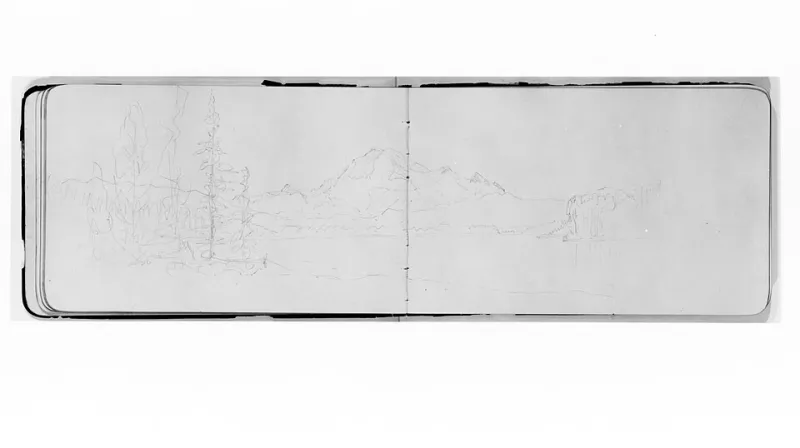
Photo: Albert Bierstadt, CC0, via Wikimedia Commons
On the morning after Bonfire Night, the park near me is a crime scene of damp cardboard and spent sparklers. The bin bags are out, the last rockets are in a hedge, and my phone is already filling with panto messages. Somewhere between the smell of wet ash and the first rehearsal schedule, there is a strange little pocket of time. Not quite a break. Not quite a sprint. Just a fortnight that nobody has claimed yet.
I have started calling it the dead fortnight: roughly the stretch after the fireworks are packed away and before panto rehearsals swallow everyone whole. As I write this on 9 November 2026, it is already here. The temptation is to treat it as a holding pen for admin, or to fill it with scrolling and the vague guilt that I should be making something. But the dead fortnight is not actually dead. It is quiet. And quiet is useful, if you stop trying to drown it out.
The temptation to fill the quiet
Every year I do the same thing. I open my laptop with a noble plan to sort receipts, update the website, answer emails from August and finally learn what a CRM is. Three hours later I have watched a video about a man restoring a 1970s food mixer and convinced myself that this counts as research. The quiet gets filled with noise because noise feels like progress.
There is also the pressure to make the gap productive. If you work in performance, November can feel like a race to prove you are not idle before the Christmas engine starts. But not every week needs a project plan. Some weeks need a bin bag, a cup of tea and a sensible look at what is actually in front of you. The trick is to lower the stakes enough that making something feels possible again.
Three small projects that cost nothing
These are not commissions. They are not portfolio pieces. They are the creative equivalent of tidying a drawer: small, finite and oddly satisfying. None of them need a budget, and all of them can be done in an afternoon or less.
1. The one-page panto
Take a single sheet of A4 and write a six-scene panto on it. Not a good panto. A panto that could be performed in a village hall with four people, a chair and a suspicious amount of tinsel. Give yourself one hour. The point is not to create a script you will actually stage. The point is to remember that theatre can start with a sheet of paper and a silly idea, not a funding bid and a risk assessment.
Mine usually involves a lost recipe, a talking kettle and a villain who is allergic to mince pies. It is rubbish. It is also the most fun I have all month. If you want to make it slightly useful, file it under something you might revisit in January when the diary is empty and your standards are lower.
2. The five-minute voice note
Record yourself telling a story for five minutes. No editing. No backing track. No second take unless the first one was interrupted by a delivery driver. Tell it to a friend, or to your phone, or to the cat. The only rule is that it has to be spoken, not written. Speaking forces you to find the shape of a story without hiding behind formatting.
This is a good one for performers because it exposes the bits that need work. You hear where you rush, where you apologise, where you forget the point. You also hear the phrases that sound like you. Keep the recording. In a fortnight, listen back and steal the good bits for something else.
3. The repair table
The least glamorous project, and possibly the most useful. Clear a table. Put every prop, costume bit, cable, tape roll and half-broken thing from the last few months on it. Sort it into three piles: fix now, fix later, bin. Sew the button. Tape the cable. Write the list of things you actually need to replace, rather than the list of things you think you need because a website said so.
For me, this is where the dead fortnight earns its name. It is a small, practical ritual that makes the next busy period less chaotic. It also reminds me that a lot of theatre is maintenance. Not every task has to be a statement.
A short note on funding deadlines
This is the bit where I am supposed to tell you to apply for everything before Christmas. I am not going to do that. Most of the big public funders have moved towards rolling or open access schemes, but plenty of small trusts, local authority pots and charity grants still cluster their deadlines in late November and early December.
The only deadlines that matter are the ones attached to a project you can actually deliver. Ask three questions before you open a blank application form. Is there a live idea with a date and a place? Can I realistically make it happen with the money and time I have? Does this funder actually support the thing I do, or am I just chasing the deadline because it is there?
If the answer to any of those is no, close the tab. The quiet fortnight is not improved by a panic-written bid for a project you invented forty minutes ago. Spend the time on the one-page panto instead. It is cheaper and you will sleep better.
Rest is not a failure of the work
Here is the argument I keep having with myself: rest feels like the opposite of making. It feels like the bit where you stop. But in practice, the dead fortnight is where a lot of the work actually happens. The brain catches up. The ideas that were too quiet to hear in October get a chance to speak. You notice that the show you are about to rehearse needs a different ending, or that the sketchbook page you hated is actually the start of something.
Treating rest as part of the work does not mean doing nothing and calling it research. It means accepting that the calendar has a rhythm. Bonfire Night is loud. Panto is loud. The bit between them is allowed to be softer. You are not falling behind. You are between two noisy things, and that is a reasonable place to be.
A plan for the next fourteen days
If you want a shape for the fortnight, keep it simple. Pick one of the three projects above. Give it a fixed, small amount of time. Then protect one afternoon where nothing is scheduled except a walk, a cup of tea and a notebook you do not have to fill. Check your funding deadlines once, not every day. Answer the panto emails when they arrive. Leave the rest.
The dead fortnight will be over before you know it. The sky will go quiet, the rehearsal room will fill up, and someone will ask you to source a fake goose for act two. You will be glad you did not spend the whole gap trying to prove you were busy. You will be glad you made something small instead.