Whistling, Lucky Socks and the Pre-Show Huddle: A Field Guide to Backstage Superstition
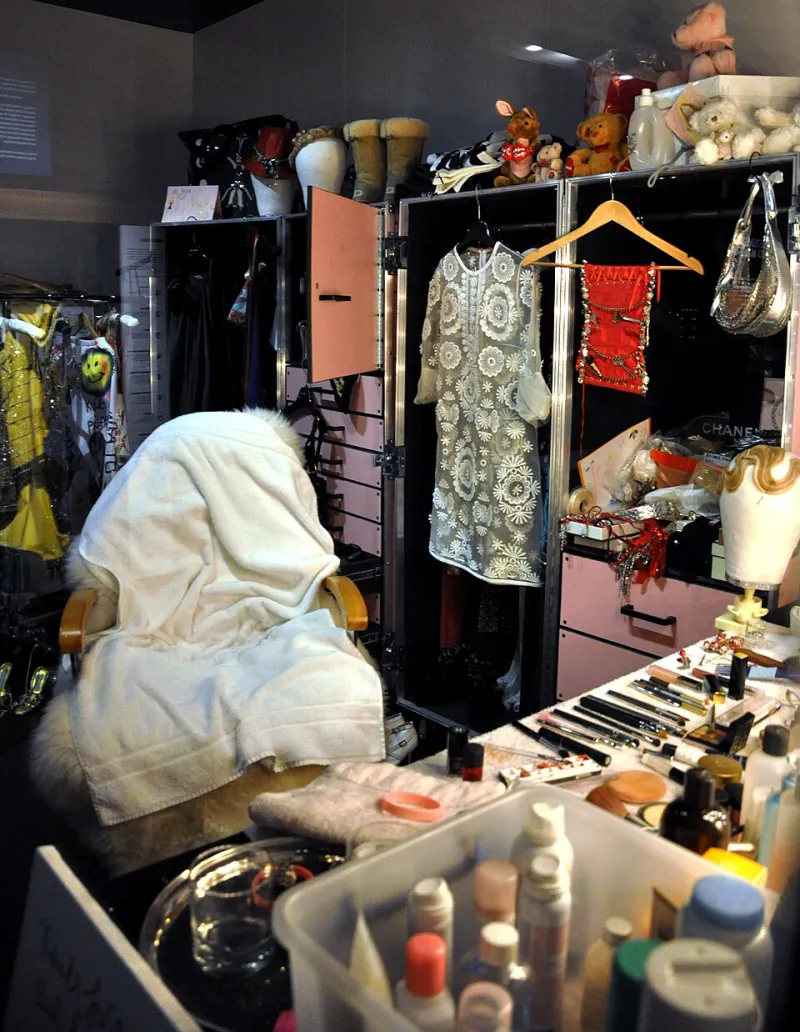
Photo: Photo: Andreas Praefcke, Public domain, via Wikimedia Commons
Every dressing room I've ever been in has had at least one rule that nobody can fully justify. A mirror covered in gaffer tape. A particular mug that must not be used by anyone else. A collective, half-joking panic if someone says the wrong word before the half-hour call.
Theatre people like to describe themselves as unsuperstitious. Then they knock on the door frame, spit over their shoulder and refuse to sit in the chair with the broken arm. So I went and collected a few, partly to satisfy my own curiosity about where they came from, and partly because I wanted to know which of them are still holding on in 2026 — and whether any of them are secretly just good practice in a costume.
The Scottish play, obviously
You know the one. Say its name in a UK dressing room and someone will make you leave, spin around three times, swear, and ask politely to be let back in. The usual origin story is that the play's early performances were plagued by disaster and that Shakespeare's witches' incantations were allegedly real charm-work. There's also a more mundane theory: rival companies would shout the title to sabotage a production, so actors stopped saying it aloud. Either way, the taboo has outlived the reasons by about four centuries.
What's interesting is how regional it is. At a community theatre in West Yorkshire, I was told the curse only applies inside the building. At a touring venue in Bristol, the rule was absolute, including the car park. A stage manager in Nottingham told me she'd worked with a director who banned even the film adaptation's title from the green room. The habit adapts; the shape of it stays.
Whistling backstage
The reason behind this one is genuinely practical, and it's my favourite. Before cue lights and talkback, stage crews signalled scene changes to each other by whistling. A stray whistle from an actor could therefore be mistaken for a cue — a flown piece of scenery coming down on someone's head, or a curtain going out mid-speech.
So the ban survived the technology. It's a superstition that's really a safety memo that nobody updated. In 2026 most venues run on comms headsets, but I've yet to meet a technician who relaxes about whistling in the wings. Nor should they.
Lucky socks, lucky pants, lucky everything
I asked around, and this is where things get charmingly specific. One actor I know has worn the same pair of socks for every opening night since 2014; they are now more darning than sock. A Carlisle am-dram society has a shared tradition of a specific brand of boiled sweet in the green room, passed down through at least three committees. A puppeteer in Hampshire keeps a small brass bell in her kit that she rings once before the first cue and never otherwise.
None of this is unusual. What is unusual is how consistent the function is: the lucky object is almost always something you can touch, and it's almost always reserved for the moment before you walk on. It's a small, repeatable action that says we've done this before, we can do it again.
The huddle
Less a superstition, more a team sport. The pre-show huddle — hands in, a count, a word — has become near-universal on the UK touring circuit, and I'd argue it's the most genuinely useful ritual on this list. It synchronises breathing, it forces a moment of eye contact, and it gives a nervous first-timer something to do with their hands.
Half of these habits survive because they work. The other half survive because stopping would feel like tempting fate, which is a kind of working too.
The ones I'd quietly retire
Not everything earns its keep. The habit of wishing someone good luck before a show ("break a leg") is harmless and I like it. The habit of telling a nervous performer that a bad dress rehearsal means a good opening night is less harmless, because it's often not true and it gives people an excuse to ignore real problems with the tech.
Similarly, the tradition of never saying the final line of a play aloud before opening night sounds romantic until you realise it's how a whole cast ends up uncertain about the ending. A Carlisle stage manager put it well: "Rituals should prepare you. If a ritual is stopping you from doing the preparation, it's not a ritual any more, it's an excuse."
What's actually being kept in 2026
From my entirely unscientific survey of a dozen companies and venues: the Scottish play taboo is holding strong. Whistling is still banned, mostly on safety grounds dressed as superstition. Lucky garments are thriving, though they're increasingly things that are comfortable rather than things that are old. The huddle is everywhere. And the newer rituals are digital — a group chat that goes quiet forty minutes before curtain, a phone in a specific drawer, a shared playlist that must not be skipped.
Which is, I think, the point. The content of the ritual changes; the need for one doesn't. A dressing room is a strange, exposed little room, and the people in it are about to do something that can go wrong in public. Small repeated actions are how a group of individuals becomes a company in the ten minutes before the half-hour call.
So keep the socks. Keep the bell. Just don't whistle, and whatever you do, don't say the name. Some of us are working.