From Appliance Manual to Actual Human: Rewriting My Artist Statement
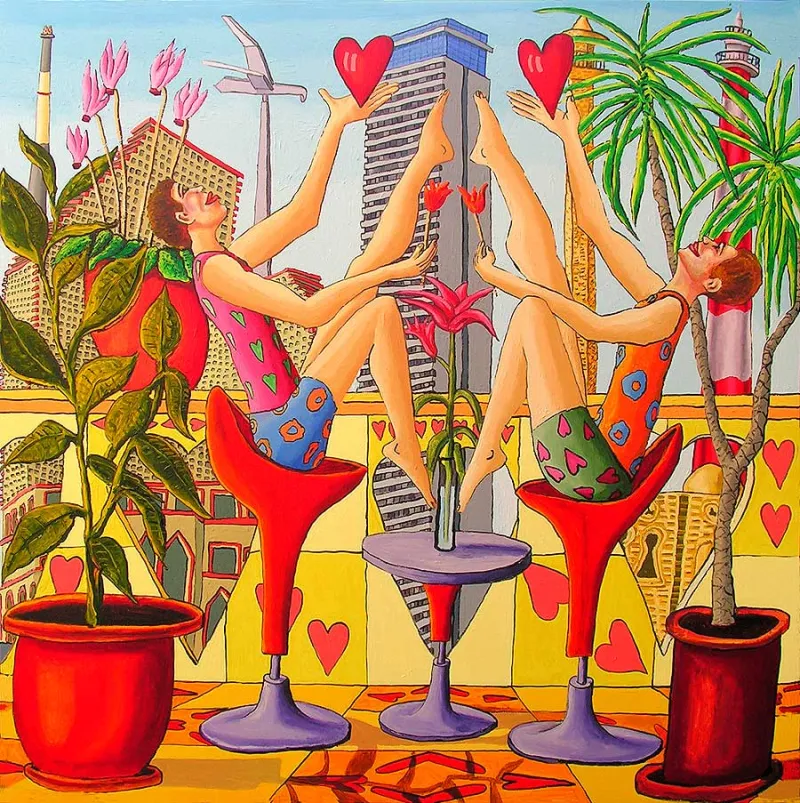
Photo: Raphael Perez Israeli Artist, CC BY 2.0, via Wikimedia Commons
The statement that made a gallery assistant blink
A few years ago I sent an artist statement to a small gallery in the Midlands. The assistant replied with the words every creative dreads: 'Thanks, this is really useful. We just need something a bit more… human?'
I read my statement back. It began: 'My practice interrogates the liminal space between materiality and memory, deploying a visual language of rupture and repair.' It went on to mention 'modes of making' twice and 'the archive' four times. It sounded like a dishwasher manual written by someone who had never loaded a dishwasher. It was accurate in the way a weather forecast is accurate: technically true, emotionally useless.
So I rewrote it. Then I rewrote it again. Here are the three drafts, with notes on what changed and why.
Draft one: the overblown original
Owen Shipp is a multidisciplinary artist whose practice interrogates the liminal space between materiality and memory. Working across performance, text and assemblage, he deploys a visual language of rupture and repair to question dominant narratives of place and belonging. His work has been shown in regional contexts and site-responsive settings, and he is currently developing a body of work that foregrounds the archive as a site of contested meaning.
This is not a lie. It is a fog. Every noun has a bodyguard. 'Practice' is doing the work of 'I make things'. 'Site-responsive settings' means 'I have performed in a church hall and a car park'. 'Contested meaning' means 'I am not entirely sure what it means yet, and neither is anyone else'.
The problem is not the vocabulary. The problem is the distance. There is no room in that paragraph for a person to be curious, wrong, or covered in glue.
Draft two: the stripped-back middle
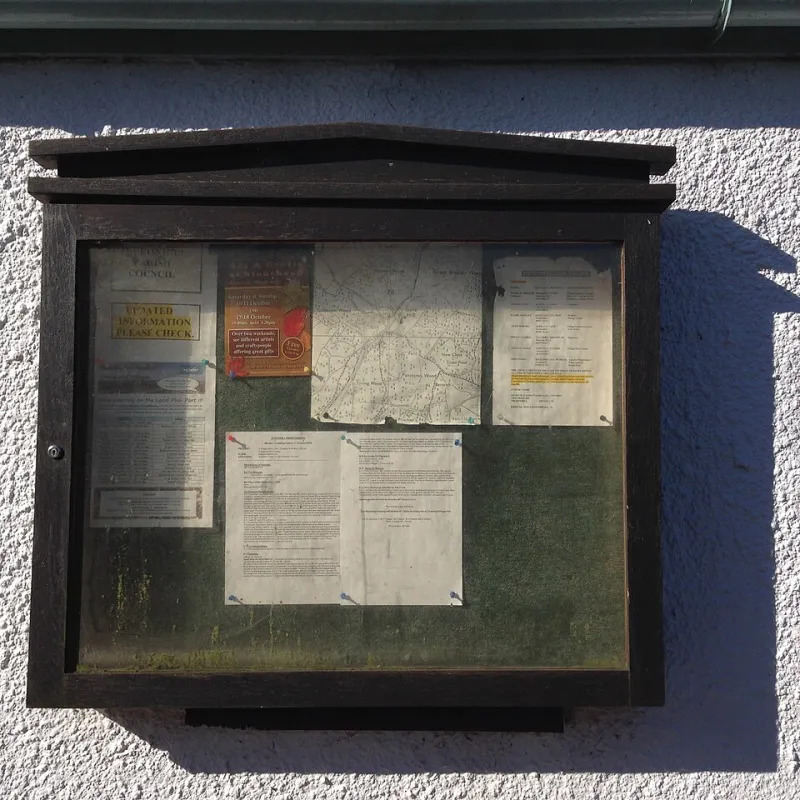
I make performances and objects about places that are changing. I am interested in noticeboards, bus stops, parish halls and the small evidence people leave behind. I work with text, found materials and live performance. I have shown work in regional theatres, village halls and a former shop. I am currently making a piece about the things we pin up and the things we take down.
Better. You can see the shape of a practice. But it is still a bit tidy, like a CV wearing a cardigan. It tells you what I make and where I have shown it, but not why I keep doing it. The next draft needed a pulse.
Draft three: the plain-English version
I am an artist and writer based in the UK. I make performances, small objects and written pieces about the places people live in and the traces they leave behind. I am interested in noticeboards, bus stops, parish halls, shop windows and the bits of a town that are always half-finished. My work often starts with a walk and a notebook, and ends up as a performance, a zine or a pile of cardboard with a story attached.
I have shown work in regional theatres, village halls and a former shop. I like making things that can travel in a car and be set up by two people in an hour. At the moment I am working on a piece about the things we pin up in public and the things we quietly take down.
This one sounds like me. It has a location, a method, a limitation and a current obsession. It is not trying to impress a funding panel with its vocabulary. It is trying to help a programmer, an editor or a curious audience member understand what they are inviting into their building.
The method: three questions and a red pen
The method I now use is simple enough to repeat. First, write the bloated version. Do not edit it. Let the fog out. Second, answer three questions in plain sentences: What do I actually make? Where does it happen? Why do I keep doing it? Third, read it aloud. If you would not say it to a friend in a pub, cut it.
Then do a final pass for the things that make a statement useful to other people: a sentence about scale, a sentence about touring or installation, and a sentence about what you are working on now. Keep the human bits. The fact that you work from a spare room, or that your props fit in a hatchback, is not a weakness. It is information.
Sounding like a person, not a product label
The artist statement is not a magic spell. It is a handshake. It should tell someone what you do, how you do it, and what it might be like to work with you. If it sounds like a dishwasher manual, put it down. Pick up the notebook instead. The plain version is almost always the one that gets you the reply.