Messages From the Back Row: What a Notebook Taught Me About Making Theatre for Real Rooms
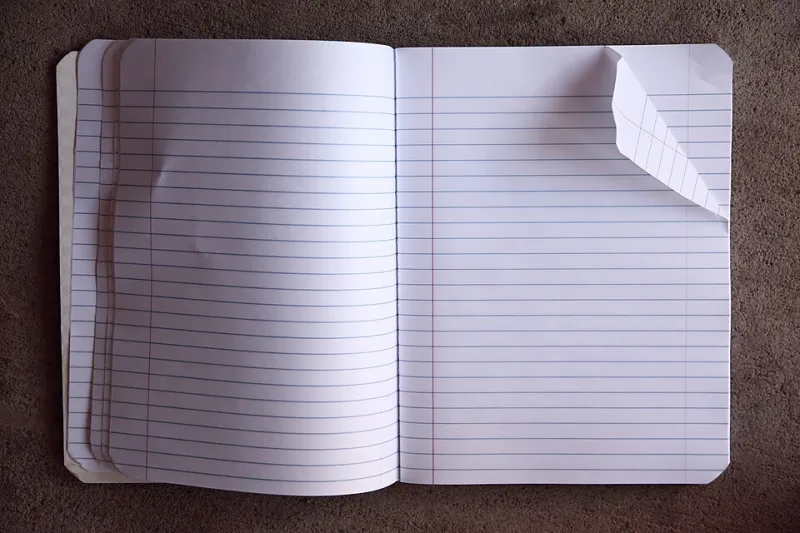
Photo: Pink Sherbet Photography from USA, CC BY 2.0, via Wikimedia Commons
I started leaving a notebook by the door because I was nosy. That is the honest version. The tidier version is that I wanted feedback, but “feedback” sounds like a form with tick boxes and a scale from one to five, and I have never once been excited by a scale from one to five. A notebook felt less like homework. It felt like leaving a chair out for someone who might want to sit down.
The first one was a 99p exercise book from a shop that has since closed, placed on a folding table beside a bowl of unwrapped Fox’s Glacier Mints. We were in a parish hall with a radiator that clanked like a reluctant percussionist. I wrote “Tell me what you thought — good, bad, baffling” on the cover in biro. Then I went backstage, which in this case meant behind a curtain, and tried not to think about it.
The 99p Experiment
By the interval, the notebook had three entries. One said “lovely”. One said “the bit with the suitcase went on a bit”. One was a drawing of a dog. I have kept the dog.
That was the beginning of a habit I have carried through village halls, upstairs pub rooms, a converted church in Suffolk and a scout hut in Gloucestershire where the heating was either full blast or off entirely. I leave a notebook by the door at small shows. Not every night. Not as a stunt. Just when the room feels like the sort of place where people might scribble something on the way out.
In 2026, when every platform wants a tidy little metric and every show is meant to have a “digital journey”, a scruffy notebook feels almost rebellious. But it is not a marketing trick. It is a way of listening to the room you are actually in.
The Notes That Land (and the Ones That Gently Miss)
Audiences are specific in ways that surprise you. They do not usually write “Act Two needs work”. They write “I lost track after the bit with the letters” or “the song about the bus made my friend laugh so much she had to leave”. One person wrote: “The pause before the last speech was too long — I thought someone had fainted.” I had thought that pause was profound. It was, in fact, four seconds too long.
Another note, from a pay-what-you-can night in a church hall, said: “Would have liked more of the paper birds.” We had cut the paper birds because we thought they were childish. The room disagreed. We brought them back, slightly changed, and the show got warmer. Not because the birds were magic, but because the audience had told us where their attention wanted to go.
The notes that sting are rarely cruel. They are usually accurate. “The first ten minutes felt like waiting for a train” is not a review; it is a note from someone who stayed. “I couldn’t always hear the quiet bits” is not an insult; it is a technical memo from the back row. You learn to read them the way you read a rehearsal note: not as a verdict, but as a clue.
Things People Want to Pocket
Then there are the prop notes. I did not expect the props to get their own fan mail. A small wooden bird, a chipped teacup, a length of blue ribbon — these are the things audiences ask about. “Where did the little suitcase come from?” “Can I buy the teacup?” “My daughter wants to know if the fox is real.”
At one show, a note read: “I wanted to take the paper moth home.” At another: “Please tell me the coat is from a charity shop and not a prop store, because I want one.” These are not useful in the way a feedback form is useful. They are useful in a different way. They tell you what has become real in the room. The story is not only in the script; it is in the objects people believe in.
We started putting a small line in the programme: “Props are not for sale, but the notebook by the door is for your thoughts.” It got a laugh. It also got more notes.
Kindness With No Name Attached
The strange thing about anonymous notes is how kind they often are. Not polite — kind. There is a difference. Polite is “very good, thank you”. Kind is “I came on my own and didn’t feel alone for an hour, so thank you”. Kind is “the bit about your dad made me ring mine on the way home”. Kind is someone drawing a wonky star and writing “keep going” underneath it.
I do not know who wrote those. I never will. That is part of what makes them useful. They are not trying to build a relationship with me, or get a reply, or be seen being generous. They are just leaving a mark on the way out. It is the opposite of a content strategy. It is a conversation with the door open.
Evidence, Not a Content Plan
I have learned to treat the notebook as creative evidence rather than a content plan. It does not tell me what to post. It tells me what happened in a room. It tells me which silences held and which ones sagged. It tells me which jokes landed in Sheffield and which ones needed a different room. It tells me that the bit I was most precious about was often the bit someone else barely noticed, and the bit I nearly cut was sometimes the bit someone carried home.
That is not data in the dashboard sense. It is closer to a sketchbook: messy, partial, occasionally illegible, and full of things you did not know you were making. You do not aggregate it. You read it, you notice a pattern, you change one thing, and then you go and do the show again for a different set of people in a different hall with a different clank in the radiator.
The Blank Pages Are the Point
Not every notebook fills up. Some nights there are two notes and a shopping list. Some nights there is nothing but a drawing of a cat and the word “nice”. That is fine. The blank pages are part of it. They remind you that most people are not there to evaluate you. They are there to have an evening. Your job is to make the evening worth the trip, not to turn them into a focus group.
So the notebook stays by the door. It is not a clever bit of audience engagement. It is a cheap exercise book, a biro on a string, and a willingness to be told that the pause was too long. That is still, as far as I can tell, one of the most useful things you can do for a show. The room knows things. You just have to leave it somewhere to write them down.