Sign Here, Then Build the Castle: The Paperwork That Made the Show Possible
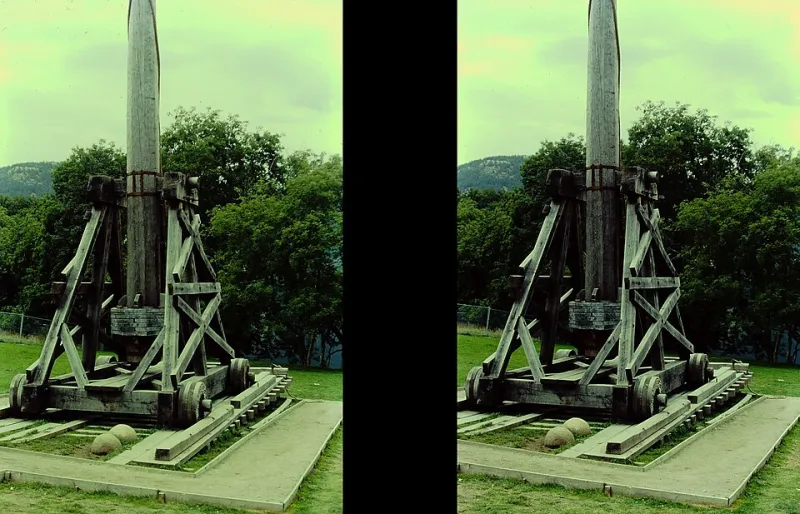
Photo: VasuVR, CC BY-SA 4.0, via Wikimedia Commons
The most useful sentence anyone said to me last year came from a venue manager holding a clipboard, and it was this: 'What happens if the tower falls towards the audience?'
We were standing in a church hall in the middle of a Tuesday, looking at a cardboard castle. It was four metres of painted packing boxes, gaffer tape and optimism, built to be assembled onstage with the audience's help during a forty-minute family show. It looked magnificent. It also, now that someone had asked, looked like a thing that could fall over.
I want to make the case for that question.
The bit nobody photographs
There is a version of creative life where the work is the work and the admin is the tax you pay for it. The photos are of rehearsals, paint-splattered hands, a sold-out room. Nobody posts the public liability certificate.
But every small-scale project I've made in the UK has been quietly shaped by forms. The venue hire agreement with its clause about candle use. The insurance schedule asking, in a dry little box, whether you'll be working at height. The risk assessment template that a parish council downloaded in 2014 and has been gently reusing ever since.
For years I treated this as friction. Now I treat it as a free consultation with someone who has seen more things go wrong than I have.
A tower, sixty children and one roll of tape
The castle was the centrepiece of a show about building something together. The idea was simple: the audience arrives, the drawbridge goes up, the walls get decorated, the tower gets stacked, everybody cheers. Warm, participatory, cheap.
What I hadn't really thought through was the bit where sixty people, many of them under eight, all want to be the one who puts the top box on. In my head it was a graceful collective act. In reality it was a small, joyful stampede.
So we wrote it down. Not because we expected disaster, but because the form asked us to imagine one.
What the risk assessment actually said
Filling in a risk assessment properly is an exercise in refusing to be vague. You can't write 'audience participation — low risk'. You have to name the hazard, say who it affects, rate the likelihood, and list control measures. Ours ended up with entries that changed the show for the better:
- Hazard: tower collapse during stacking. Control: maximum height of 1.8 metres, base weighted with two sandbags, a marked 'build zone' on the floor, one adult per eight children.
- Hazard: trips on discarded tape and offcuts. Control: a bin inside the build zone, cleared at two fixed points in the show.
- Hazard: crowding at the front. Control: a taped line at 1.5 metres, and a 'walking lane' down the middle for anyone who needs to leave.
- Hazard: cardboard edges. Control: every cut edge taped, every box checked before the doors open.
The 'walking lane' came out of the form. So did the bin, and so did the idea that the tower should stop at 1.8 metres, which — and this is the bit that annoys me — made the silhouette onstage better. The castle got squatter and sturdier and read more clearly from the back of the room.
Insurance is not the enemy of invention
There's a reflex among makers that paperwork exists to sand down the interesting edges of a project. Sometimes it does. But more often, public liability insurance and venue forms are asking one question: have you thought about this?
A £5 million public liability policy is not a licence to be reckless; it's the thing that lets a hall say yes to you at all. The hire form isn't bureaucracy for its own sake — it's the caretaker's way of knowing whether to unlock the side door and whether the fire exit will still be clear at nine o'clock.
The trick is to answer honestly and then keep going. Say what you're actually doing. If you're using a smoke machine, say so. If there's a step, say so. If you're handing out scissors, say so, and say who's supervising. The venue would much rather have the real, slightly messy answer than a tidy one that turns out to be wrong on the night.
Paperwork as a rehearsal
Once I stopped treating the form as a hoop, it became the first read-through of the show. Writing down the sequence — audience enters, boxes distributed, tower built, tape collected, castle struck — exposed the moments where the room would bunch up, where a child would be left holding something heavy with no adult nearby, where the cheerful chaos would tip into actual chaos.
You can rehearse that on the floor, and we did. But the form made us rehearse it in a language that assumed something could go wrong, which is a different and useful kind of imagination.
What I'd say to a venue manager now
Ask me the awkward question early. Ask it in the autumn, in daylight, before the posters are printed. Ask me what happens if the tower falls, and I'll tell you about the sandbags and the 1.8 metres and the walking lane. Then we'll both sign, and I'll go and build the castle, better than I'd planned, because someone made me write it down first.