The Singles Shelf: What a Lost Property Table Tells You About the People in the Room
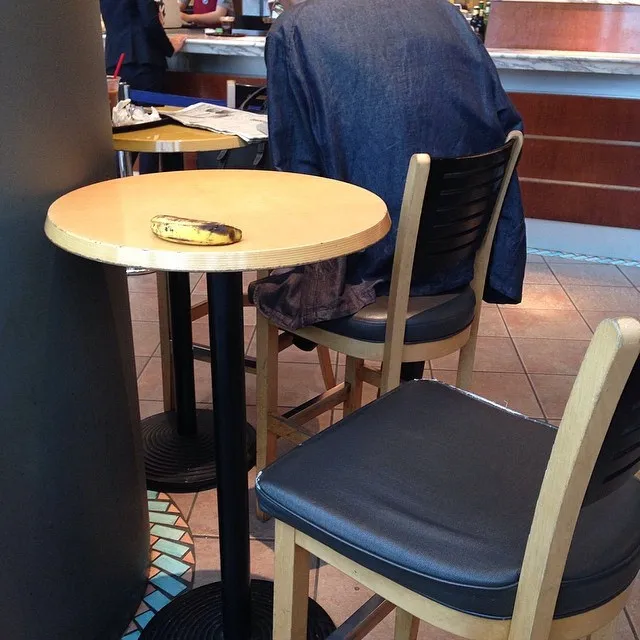
Photo: monoprixgourmet, CC BY 2.0, via Wikimedia Commons
There is a point in every short run when the lost property table stops being a table and becomes a small, accidental museum. You start with a biscuit tin of odds and ends and by the Sunday matinee it has its own geography: a drift of single gloves at one end, a constellation of hair clips in the middle, and a Tupperware lid that nobody has claimed since Thursday.
I have spent enough time behind door sales to know that the table is never just about lost things. It is a record of who came, what they were carrying, and how carefully — or not — they were holding on to it.
The Table Is Not a Metaphor (Except When It Is)
Our table lives in the corner of a church hall in West Yorkshire, next to the urn and a noticeboard advertising a jumble sale that happened in 2023. It is covered in a piece of gingham I bought from a haberdashery that was closing down. On it, after four performances, we had accumulated: three single gloves, one pair of reading glasses, a retainer in a small pink case, a child’s hair clip shaped like a strawberry, a Tupperware lid, a paperback with a bus ticket marking page 84, and a whistle.
The whistle worried me. Who brings a whistle to a play? A referee, perhaps. Or someone who has learned, over a lifetime, that it is better to be prepared for an emergency than to be caught short. I liked that. I liked the idea of someone sitting in the back row with a whistle in their coat pocket, just in case the evening required it.
What Gets Left Behind, and Why
The single gloves are the most common. Always the left one, it seems, though I have never done a proper count. They are rarely expensive. Mostly knitted, mostly navy or black, mostly the sort of glove you buy in a multi-pack from a supermarket because you know you will lose one. The lost property table is where they go to be honest about that.
Then there are the things that suggest someone came straight from work. A lanyard with a photo ID turned face down. A small Tupperware tub containing two grapes and a segment of orange. A receipt from a hardware shop for a mop head. These are the objects of a life that has been compressed into an evening out, and they carry a certain dignity. You do not leave your lanyard behind because you are careless. You leave it behind because you took it off to be comfortable, and then the lights went down, and you forgot you had ever been at work at all.
The Retainer Problem
A retainer in a pink case is a different sort of object. It is intimate. It suggests someone who took it out before the show, perhaps because they were worried about laughing too hard, or because they had a drink, or because they were simply following the instructions of an orthodontist with more authority than I will ever possess. It sat on the table for three days. Nobody claimed it. I began to feel responsible for it in a way I had not anticipated. It was, after all, a small piece of someone’s mouth, and it had been entrusted to a church hall.
On the final night, a woman in a green coat came back for it. She did not make a fuss. She said, “Oh, thank God,” in a quiet voice, and put the case in her handbag with the care of someone returning a baby to a pram. Then she said, “I’ve been in a right state.” I did not ask. It felt like enough.
The Lid That Outlasted Its Tub
A Tupperware lid with no tub is a philosophical problem. You cannot throw it away, because it is useful. You cannot keep it indefinitely, because it is not yours. It sits in the middle of the table like a question. What was in the tub? Sandwiches, probably. Or cake. Something that someone brought to share and then forgot to take home. The lid is the residue of an intention. It says: I planned to be here, and I planned to be generous.
I like the lid more than I like most things on the table. It is not sentimental. It is just a lid. But it is also proof that someone thought about the interval.
Reading the Room Through Its Pockets
After a while you start to read the audience by what they leave behind. A run with lots of reading glasses suggests a crowd who came prepared to read the programme. A run with lots of hair clips suggests children, or people with long hair, or both. A run with a single whistle suggests a referee, or a very specific kind of person who has learned not to trust the world.
The table is not a survey. It is not data. But it is a kind of listening. It tells you who turned up, and what they carried, and what they were willing to let go of for two hours. It is a record of care, and forgetfulness, and the small negotiations of being a person in a room with other people.
The Ethics of the Box
We keep the lost property in a box under the stairs between shows. The box is labelled “LOST PROPERTY — PLEASE ASK” in my handwriting, which is not reassuring. The rules are simple: we keep things for a month, then we donate what we can and bin what we cannot. The retainer went home. The whistle went to a charity shop. The single gloves went to a homeless shelter, which felt like the right destination for something warm and unclaimed.
The lid stayed. It is still in the box. I cannot bring myself to throw it away. It is not mine, but it is also not nobody’s. It is a small, stubborn record of someone who came to a play in a church hall and brought a tub of something to share, and then, for whatever reason, forgot the lid.
Claiming Hours
On the final night, we put a sign on the table: “Anything here yours? Take it. Anything not yours? Leave it.” A man came up and took a glove. He said, “This is definitely mine.” It was not. It was a left-hand glove and he was holding a right-hand glove in his other hand. But he looked so pleased that I did not say anything. He put it on, flexed his fingers, and walked out into the rain.
That is the lost property table, in the end. It is not an archive of things. It is an archive of people trying to get home, and mostly succeeding, and occasionally needing a small pink case to help them do it.